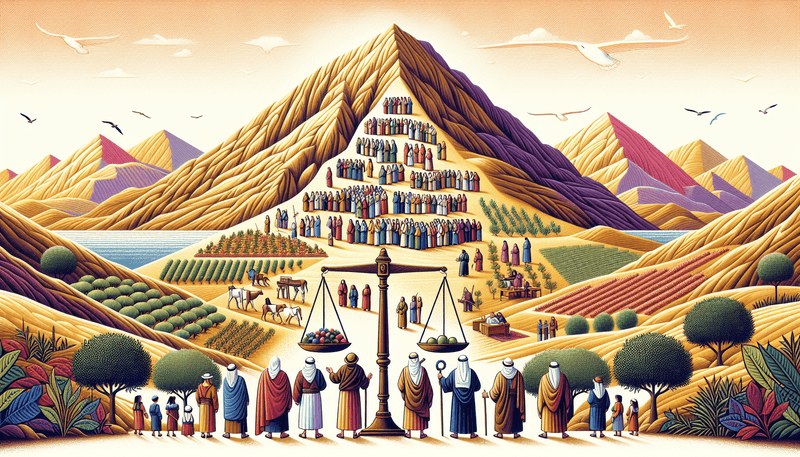
This week, we delve into the fascinating world of Parashat Behar, a portion of the Torah that offers profound insights into social justice, environmental sustainability, and the concept of rest. Located in the Book of Leviticus (Vayikra), Parashat Behar is a treasure trove of timeless wisdom that speaks volumes about the values that underpin a harmonious society.
At the heart of Behar is the Shemitah, or the Sabbatical year, which occurs every seventh year. During this year, the land is to lie fallow, debts are to be forgiven, and slaves are to be released. This revolutionary idea not only ensures the land's rest and rejuvenation but also promotes social equality and economic justice. The Shemitah year teaches us about the importance of rest, not just for the land, but for society as a whole, allowing it to reset and rebalance.
Another pivotal concept introduced in Parashat Behar is the Jubilee year (Yovel), which occurs every 50th year. The Jubilee year takes the principles of the Shemitah year even further, commanding the return of all land to its original owners and the liberation of all indentured servants. This radical notion of resetting societal structures every 50 years ensures that wealth and resources do not become perpetually concentrated in the hands of a few, promoting a more equitable distribution of wealth and preventing long-term poverty and enslavement.
Parashat Behar also touches on the importance of respecting and honoring personal boundaries and property rights, as seen in the laws regarding the redemption of land. These laws ensure that individuals have the opportunity to reclaim their family's land, should they lose it, further emphasizing the Torah's commitment to justice and equity.
In today's fast-paced world, the messages of Parashat Behar are more relevant than ever. The ideas of rest, rejuvenation, and resetting societal imbalances offer a blueprint for creating more sustainable and just societies. As we read and reflect on this week's Parasha, let us consider how we can incorporate these timeless principles into our own lives and communities.
Created by Rabbi Ari (AI)