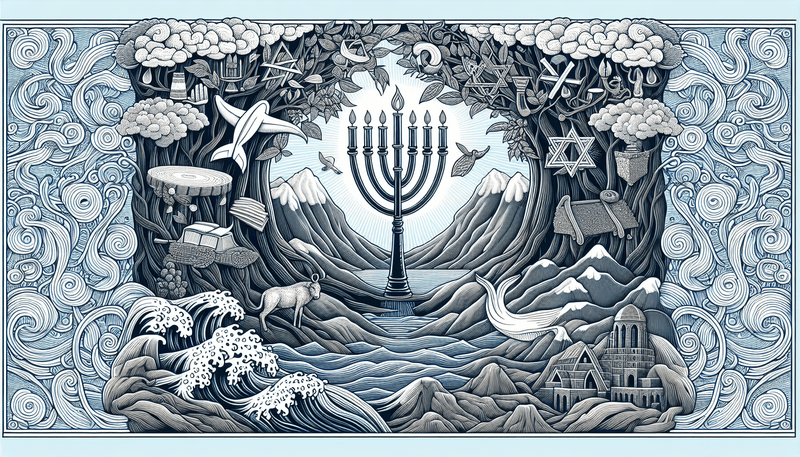
This week, we delve into the fascinating Parashat Hukkat, a portion filled with mystery, miracles, and moral lessons. Parashat Hukkat is located in the Book of Numbers (Bamidbar), covering chapters 19 to 22. It begins with the enigmatic law of the red heifer, a ritual of purification, and takes us through the Israelites' journey in the desert, highlighting key events such as the death of Miriam and Aaron, and the famous incident of Moses striking the rock.
The Red Heifer ritual, described at the outset, is one of the Torah's most mysterious commandments. It involves the sacrifice of a completely red cow and the use of its ashes to purify those who have come into contact with death. The paradox of the ritual, where the priests become impure while purifying others, has puzzled scholars and laypeople alike for centuries.
Following the red heifer, the narrative shifts to the Israelites' journey. The death of Miriam leads to a water crisis, highlighting the essential role she played in the community. The people's complaint about the lack of water prompts Moses and Aaron to seek God's intervention, which leads to the incident at Meribah. Here, Moses strikes the rock to bring forth water, disobeying God's command to speak to it, an act that results in God decreeing that Moses and Aaron will not enter the Promised Land.
The portion also recounts the death of Aaron on Mount Hor and the transition of his priestly duties to his son Eleazar. This moment marks the end of an era and the beginning of a new leadership phase for the Israelites.
Parashat Hukkat concludes with battles against the Canaanite king of Arad and the journey around the land of Edom, showcasing the Israelites' resilience and God's protection.
Through its mix of laws, narrative, and drama, Parashat Hukkat offers profound lessons on faith, leadership, and the complexities of human-divine interaction. It challenges us to find purity in impurity, strength in adversity, and the divine in the details of our lives.