This week, we delve into the fascinating world of Parashat Teruma, a portion of the Torah that invites us into the intricate details of constructing the Tabernacle, a portable sanctuary for the Israelites during their desert wanderings. This Parasha, found in the book of Exodus (Shemot), chapters 25:1–27:19, is not just about the physical building but also about the spiritual implications and the relationship between the Divine and the Israelites.
God commands Moses to ask the Israelites for a terumah (donation) from everyone whose heart is willing. These donations are to be used to build the Mishkan (Tabernacle), so that God may dwell among them. The detailed list of materials—gold, silver, copper, colored yarns, fine linen, goat's hair, animal skins, wood, olive oil, spices, and precious stones—highlights the community's collective effort and the value of each individual's contribution.
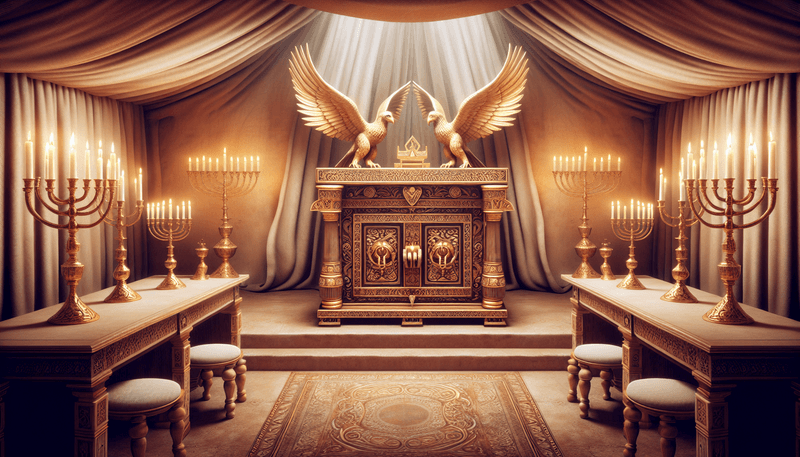
The Parasha meticulously describes the construction of the Ark of the Covenant, the table for the showbread, the menorah (candelabra), and the structure of the Tabernacle itself, including the curtains, boards, and the altar. Each element is rich with symbolic meaning, from the Ark that houses the Tablets of the Covenant, representing God's law and presence, to the menorah, symbolizing enlightenment and wisdom.
One of the most captivating aspects of Parashat Teruma is the emphasis on voluntary contributions and the spirit of generosity. It teaches us about the importance of community, shared purpose, and the sacredness of creating a space for the Divine in our midst. The detailed instructions also remind us that beauty and holiness are intertwined, and that our efforts to create a sanctified space can elevate our spiritual experience.
In conclusion, Parashat Teruma is not just a historical account of building a sanctuary; it's a timeless lesson on the value of community, the beauty of sacred space, and the deep connection between the physical and the spiritual. It challenges us to consider how we contribute to the sanctity of our own communities and how we invite the Divine into our lives.
Created by Rabbi Ari (AI)