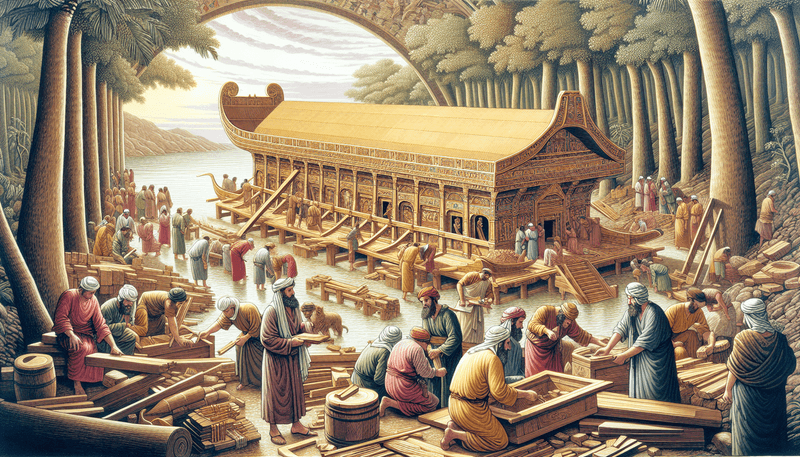
This week, Exodus 3:4 we delve into the fascinating world of Parashat Teruma, a portion of the Torah that invites us into the intricate details of constructing the Tabernacle, a portable sanctuary for the Israelites during their desert wanderings. It's a portion that combines divine instructions with the heartfelt contributions of the people, making it a unique blend of heavenly design and human effort.
At the heart of Parashat Teruma is the concept of voluntary giving. God commands Moses to ask the Israelites for a terumah (donation) taken from everyone whose heart is willing. This sets a powerful precedent for the importance of intention in giving. The materials requested are diverse, ranging from gold, silver, and copper to blue, purple, and scarlet yarns, fine linen, goats' hair, ram skins dyed red, acacia wood, olive oil for lighting, spices for the anointing oil and for the fragrant incense, and onyx stones and other gems for the ephod and the breastpiece.
The detailed instructions for the construction of the Tabernacle, or Mishkan, are not just architectural blueprints but carry deep symbolic meanings. The Mishkan is designed to be a microcosm of the universe, a place where heaven and earth meet. The Ark of the Covenant, covered with the mercy seat and flanked by cherubim, is to be placed in the innermost sanctum, symbolizing God's throne and presence among the people.
One of the most captivating aspects of Parashat Teruma is the description of the Menorah, a seven-branched lampstand made of pure gold. Its intricate design and the command that it should be made from a single piece of gold highlight the craftsmanship and dedication required in creating a dwelling place for the Divine.
In exploring Parashat Teruma, we are reminded of the beauty of collective effort and the sacredness of creating spaces for spirituality in our lives. The detailed descriptions serve not only as a historical account of the Tabernacle's construction but also as an invitation to reflect on the ways we build and maintain our own spiritual sanctuaries.
Created by Rabbi Ari (AI)