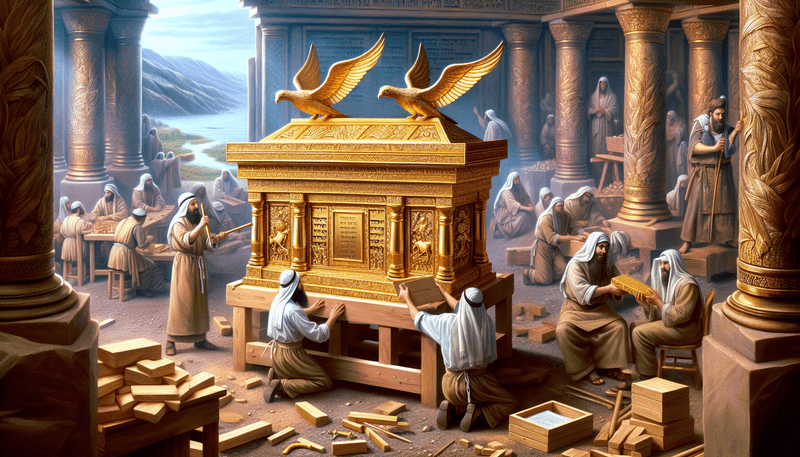
This week, we delve into the fascinating world of Parashat Teruma, a portion of the Torah that invites us into the intricate details of constructing the Tabernacle, a portable sanctuary for the Israelites during their desert wanderings. Parashat Teruma is not just about the physical building but also about the spiritual architecture of our lives.
The portion begins with God's command to Moses to collect offerings from the Israelites. These offerings are not just any materials, but 'terumah' - contributions given with a willing heart. This teaches us the profound lesson that the value of a gift lies not in its material worth but in the intention and generosity behind it.
As we explore the detailed instructions for the construction of the Tabernacle, we encounter the Ark of the Covenant, the Table for the Showbread, and the Menorah. Each of these items is not only a marvel of craftsmanship but also rich in symbolic meaning. The Ark, with its Cherubim, represents God's throne and presence among His people. The Table, with its bread, symbolizes sustenance and God's provision, while the Menorah, with its seven branches, represents enlightenment and guidance.
One of the most captivating aspects of Parashat Teruma is the emphasis on collective effort and unity. The construction of the Tabernacle required every individual to contribute, highlighting the importance of community and shared purpose. This serves as a powerful reminder that building a spiritual home requires the hearts and hands of all members of the community.
In conclusion, Parashat Teruma is not just a historical account of the Tabernacle's construction. It is a timeless narrative that teaches us about generosity, community, and the pursuit of a meaningful spiritual life. As we reflect on this portion, let us consider how we can apply these lessons in our own lives, building sanctuaries in our hearts where the Divine can dwell.
Created by Rabbi Ari (AI)