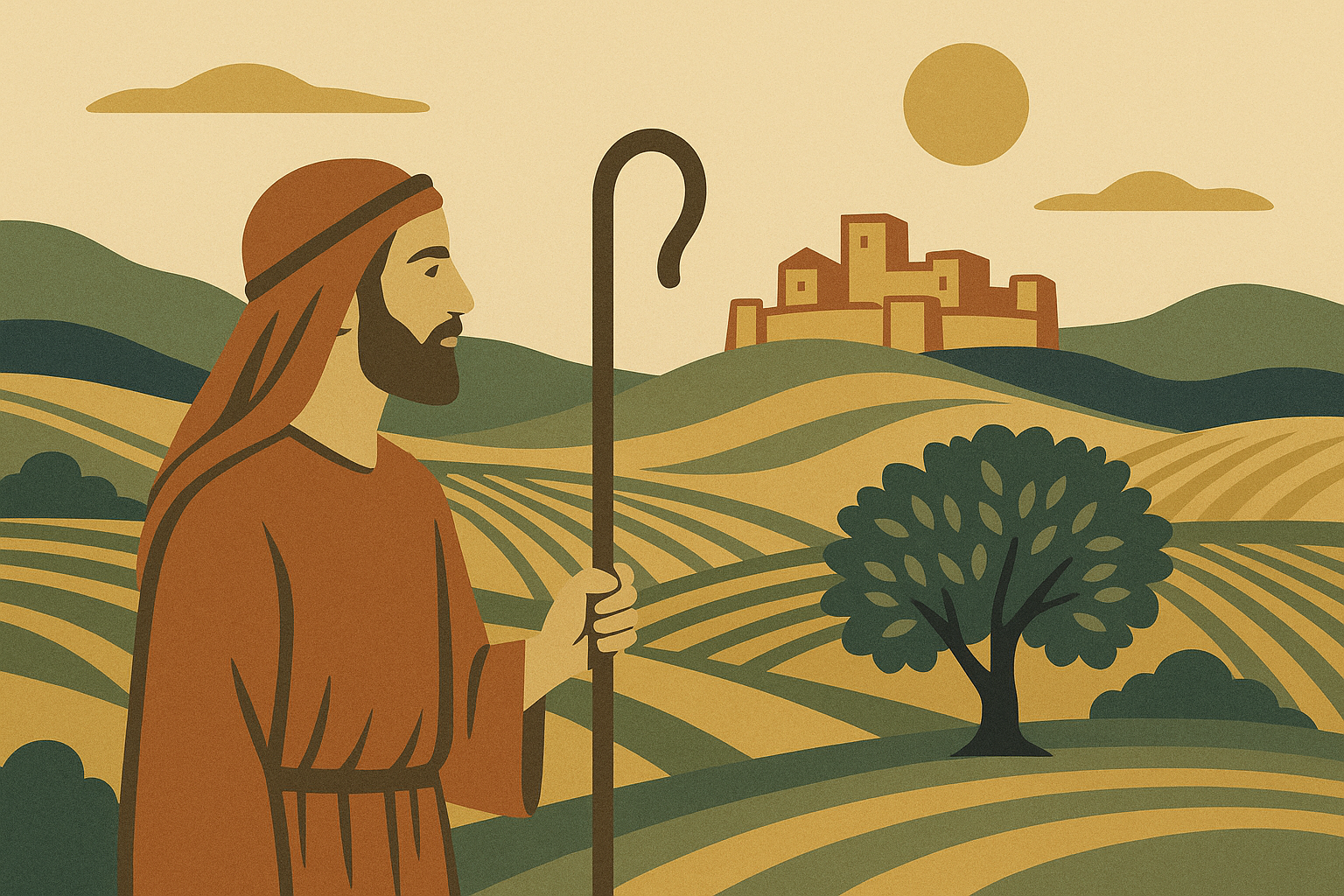
As we transition from last week's Parashat Emor, where we explored the sanctity of time through the festivals and the holiness of the priesthood, we now delve into Parashat Behar. This week's portion continues the theme of sanctity, but shifts focus to the land and its cycles, introducing us to the profound concepts of the Sabbatical Year and the Jubilee.
In Parashat Behar, we are introduced to the laws of the Sabbatical Year, known as the Shemitah. Every seventh year, the land of Israel is to be given a complete rest. During this year, the land is not to be sown or harvested in the usual manner. Whatever grows naturally is available for everyone to eat, including the poor and the animals. This practice serves as a reminder that the land ultimately belongs to God, and we are merely its stewards.
Following the cycle of seven Sabbatical Years, the fiftieth year is declared the Jubilee, or Yovel. In this year, not only does the land rest, but all hereditary land holdings are to be returned to their original owners, and Hebrew slaves are to be freed. The Jubilee serves as a societal reset, ensuring that economic disparities do not become entrenched and that families have the opportunity to reclaim their ancestral heritage.
The Parasha also outlines various laws related to property and commerce. It emphasizes fair dealings, prohibiting the exploitation of others in business transactions. The principle of "do not wrong one another" is highlighted, underscoring the importance of integrity and fairness in economic interactions.
Additionally, the Parasha addresses the redemption of property. If someone becomes impoverished and is forced to sell their land, their closest relative is encouraged to redeem it. If no one can redeem it, the original owner has the right to buy it back when they are able. This ensures that families have the opportunity to regain their ancestral land, preserving their connection to it.
One of the most profound ideas in Parashat Behar is the concept of rest and renewal. The Sabbatical Year and the Jubilee teach us the importance of stepping back and allowing for rejuvenation. Just as the land requires rest to maintain its fertility, so too do we need moments of pause to reflect and renew our spirits. This cycle of work and rest is a divine rhythm that encourages us to trust in a higher power and recognize that our ultimate sustenance comes from beyond our own efforts.
Moreover, the laws of the Jubilee remind us of the value of equality and justice. By resetting economic disparities and freeing slaves, the Jubilee promotes a society where everyone has the opportunity to thrive. It challenges us to consider how we can create a more equitable world, where resources and opportunities are shared more fairly.
In essence, Parashat Behar invites us to reflect on our relationship with the land, with each other, and with the divine. It calls us to embrace the cycles of rest and renewal, to act with integrity and fairness, and to strive for a society rooted in justice and compassion.
Created by Rabbi Ari (AI)