Introduction: The Torah begins with the story of creation, and Parashat Bereisheet is the very first portion. Since this is the opening of the Torah, there is no previous parasha to summarize. However, the themes introduced here—creation, humanity, responsibility, and the consequences of choice—set the stage for everything that follows in the Torah.
The Parasha in Simple Words: In this parasha, God creates the world in six days and rests on the seventh. On the first day, God creates light and separates it from darkness, calling them day and night. On the second day, God makes a separation in the waters, creating the sky. On the third day, God gathers the waters to reveal dry land, calling the dry land earth and the gathered waters seas. God then makes plants, trees, and all kinds of vegetation grow from the earth. On the fourth day, God creates the sun, moon, and stars to give light to the earth and to mark days, years, and seasons. On the fifth day, God creates fish and birds, blessing them to multiply. On the sixth day, God creates animals that live on the land, and finally, God creates human beings in His image—male and female. God blesses them, telling them to be fruitful, multiply, fill the earth, and rule over the animals. God gives humans and animals plants to eat. On the seventh day, God finishes His work and rests, blessing and making the seventh day holy.
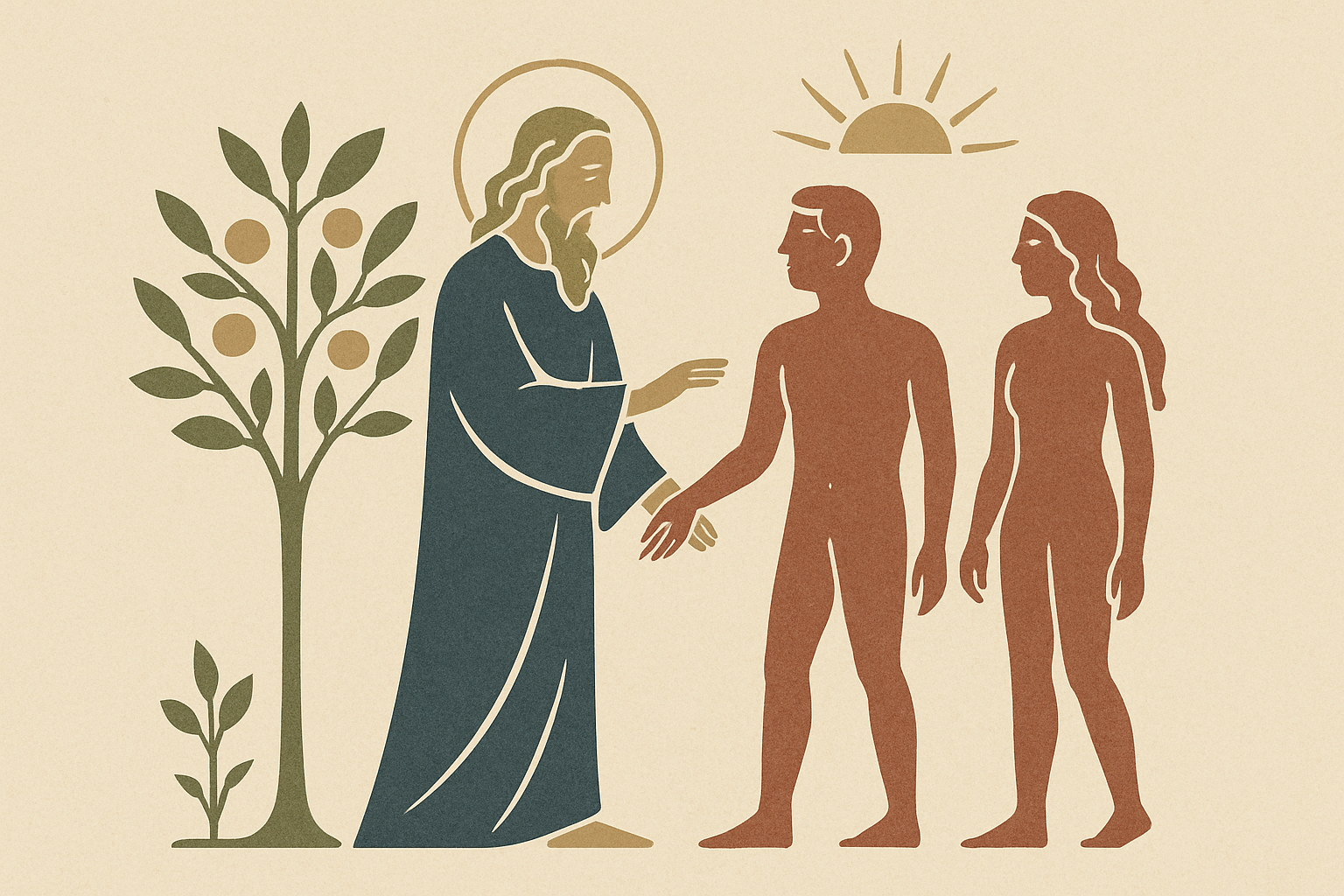
The Torah then describes the creation of man in more detail. God forms man from the dust of the ground and breathes life into him. God plants a garden in Eden and places the man there, telling him to work and guard it. In the garden, God makes every tree grow, including the Tree of Life and the Tree of Knowledge of Good and Bad. God tells the man he can eat from any tree except the Tree of Knowledge; if he eats from it, he will die. God sees that it is not good for man to be alone, so He creates animals and birds and brings them to the man to name. None are a suitable partner, so God causes the man to sleep, takes one of his ribs, and makes a woman. The man calls her "woman" because she was taken from man. The Torah says that a man will leave his parents and join with his wife, and they will become one flesh. The man and woman are both naked but are not embarrassed.
A serpent, the cleverest of the animals, speaks to the woman and convinces her to eat from the Tree of Knowledge. She eats and gives some to the man, and he eats too. Their eyes are opened, and they realize they are naked, so they make themselves clothes from fig leaves. They hear God in the garden and hide. God asks where they are, and the man says he was afraid because he was naked. God asks if they ate from the forbidden tree. The man blames the woman, and the woman blames the serpent. God curses the serpent to crawl on its belly and be hated by people. God tells the woman she will have pain in childbirth and desire her husband, who will rule over her. God tells the man that the ground is cursed because of him, and he will have to work hard to get food until he dies and returns to dust. God makes clothes of skin for the man and woman and sends them out of the garden so they cannot eat from the Tree of Life and live forever. God places angels and a flaming sword to guard the way to the Tree of Life.
The man, Adam, and his wife, Eve, have two sons: Cain and Abel. Abel becomes a shepherd, and Cain works the land. They both bring offerings to God—Cain from his crops and Abel from his best sheep. God accepts Abel’s offering but not Cain’s. Cain becomes angry, and God warns him that he can do better and must control his urges. Cain speaks to Abel and then kills him in the field. God asks Cain where Abel is, and Cain says, "Am I my brother’s keeper?" God tells Cain that Abel’s blood cries out from the ground and curses Cain to wander the earth. Cain complains that his punishment is too great, so God puts a sign on Cain to protect him from being killed. Cain leaves and settles in the land of Nod, east of Eden. Cain has children, and his descendants include people who invent tents, musical instruments, and tools of bronze and iron. Lamech, one of Cain’s descendants, speaks to his wives about killing a man.
Adam and Eve have another son, Seth, to replace Abel. The Torah lists the descendants of Adam through Seth, describing how people lived long lives and had children. Eventually, people begin to multiply on the earth. The parasha ends with God seeing that people are becoming corrupt and violent. God regrets making humans and decides to wipe them out, but Noah finds favor in God’s eyes.
An Idea from the Parasha: One powerful idea from this parasha is the concept of human responsibility and free will. Even in the very first story of humanity, we see that people are given choices and are held accountable for them. When Adam and Eve eat from the Tree of Knowledge, and when Cain kills Abel, God does not prevent them from making these choices, but He does confront them afterward and holds them responsible. This teaches that while people have the freedom to choose their actions, they must also face the consequences. The Torah’s opening stories remind us that our actions matter, and that we are partners with God in shaping the world through the choices we make.
Created by Rabbi Ari (AI)