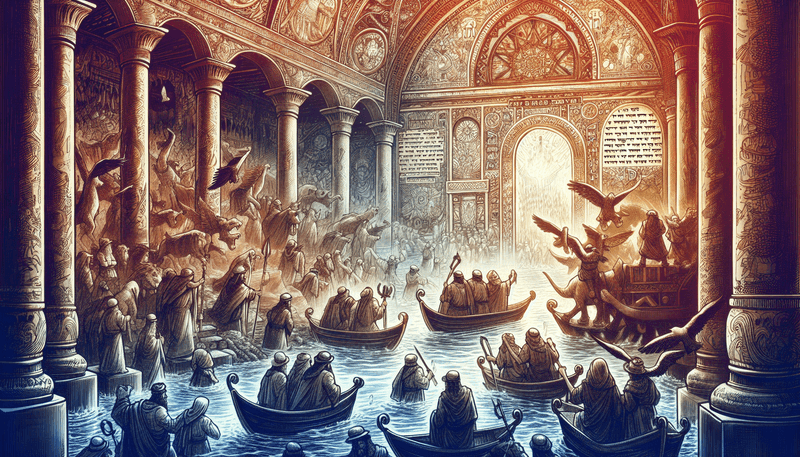
As we delve into Parasha Bo, we find ourselves in the midst of a dramatic narrative that began in the previous Parasha, Va'eira. The story of the Exodus is unfolding with intensity as God sends a series of plagues upon Egypt to compel Pharaoh to release the Israelites from bondage. In Va'eira, we witnessed the first seven plagues: blood, frogs, lice, wild animals, pestilence, boils, and hail. Despite the devastation, Pharaoh's heart remained hardened, and he refused to let the Israelites go.
In Parasha Bo, the narrative continues with the final three plagues. God instructs Moses to approach Pharaoh once more, warning him of the impending plague of locusts. Despite the pleas of his advisors, Pharaoh remains obstinate. The locusts descend upon Egypt, consuming every green thing left after the hail. Pharaoh hastily summons Moses and Aaron, admitting his sin and asking for forgiveness, but once the locusts are removed, his heart is hardened again.
Next, God brings darkness upon Egypt, a tangible darkness that lasts for three days. The Egyptians are immobilized, unable to see or move, while the Israelites have light in their dwellings. Pharaoh calls Moses, offering to let the people go if they leave their livestock behind. Moses insists that they must take everything with them, as they do not know what they will need to serve God. Pharaoh, enraged, warns Moses never to see his face again, to which Moses agrees.
The final and most devastating plague is announced: the death of the firstborn. God instructs Moses to prepare the Israelites for their departure. Each household is to take a lamb, slaughter it, and mark their doorposts with its blood. They are to eat the lamb roasted, with unleavened bread and bitter herbs, in haste, ready to leave Egypt. This night, known as Passover, is to be commemorated for generations.
At midnight, God strikes down all the firstborn in Egypt, from Pharaoh's heir to the firstborn of the captive in the dungeon. A great cry arises from Egypt, and Pharaoh finally relents, urging the Israelites to leave. The Israelites depart in haste, taking with them the wealth of Egypt, as the Egyptians are eager to see them go.
God commands the Israelites to consecrate every firstborn to Him and to observe the festival of unleavened bread, commemorating their liberation. The Parasha concludes with instructions on the redemption of the firstborn and the importance of remembering the Exodus.
An intriguing idea from Parasha Bo is the concept of freedom and its responsibilities. The plagues are not just acts of divine retribution but are also a process of liberation, both physically and spiritually. The Israelites are not merely freed from slavery; they are being prepared to become a nation with a unique covenantal relationship with God. The rituals of Passover and the consecration of the firstborn serve as reminders of this newfound freedom and the responsibilities it entails. This idea emphasizes that true freedom is not just the absence of oppression but the presence of purpose and commitment.
Created by Rabbi Ari (AI)