As we delve into Parasha Bo, we find ourselves in the midst of a dramatic narrative that began in the previous Parasha, Va'eira. The story of the Exodus is unfolding with intensity as God sends a series of plagues upon Egypt to compel Pharaoh to release the Israelites from bondage. In Va'eira, we witnessed the first seven plagues: blood, frogs, lice, wild animals, pestilence, boils, and hail. Despite the devastation, Pharaoh's heart remained hardened, setting the stage for the climactic events in Parasha Bo.
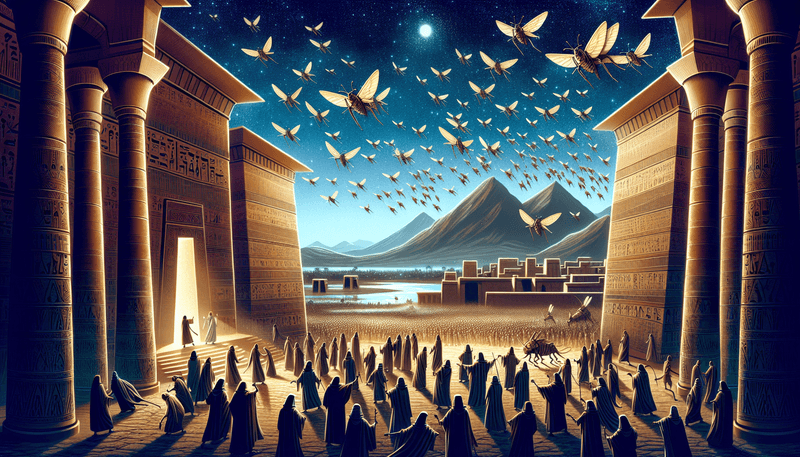
In Parasha Bo, the narrative continues with the final three plagues. God instructs Moses to approach Pharaoh once more, warning him of the impending plague of locusts. Despite the counsel of his own advisors, Pharaoh refuses to relent. Consequently, a swarm of locusts descends upon Egypt, consuming every green thing left after the hail. Pharaoh hastily summons Moses and Aaron, admitting his sin and pleading for relief. Yet, once the locusts are removed, his heart hardens again.
The ninth plague follows: a palpable darkness envelops Egypt for three days, so thick that the Egyptians cannot see one another or move from their places. However, the Israelites have light in their dwellings. Pharaoh calls Moses, offering to let the people go if they leave their livestock behind. Moses insists that they must take everything, as they do not know what they will need to serve God. Pharaoh, enraged, warns Moses never to see his face again, to which Moses agrees.
God then tells Moses of the final plague: the death of the firstborn. He instructs the Israelites to prepare for their departure by asking their Egyptian neighbors for silver and gold. God also provides detailed instructions for the Passover sacrifice, a lamb to be slaughtered and its blood used to mark the doorposts of the Israelites' homes. This sign will protect them as God passes through Egypt, striking down the firstborn of both man and beast.
At midnight, the final plague strikes, and a great cry rises from Egypt as every Egyptian household experiences loss. Pharaoh summons Moses and Aaron in the night, urging them to leave with their people and possessions. The Israelites, having prepared in haste, depart with unleavened dough, marking the beginning of their journey to freedom.
God commands the Israelites to commemorate this event annually as Passover, a lasting ordinance. The Parasha concludes with laws regarding the sanctification of the firstborn and the observance of Passover, emphasizing the importance of remembering the Exodus and its significance for future generations.
An intriguing idea from Parasha Bo is the concept of transformation through adversity. The plagues, while devastating, serve a dual purpose: they are both a punishment for the Egyptians and a catalyst for the Israelites' liberation. This duality highlights a profound truth about human experience: moments of great challenge often precede significant growth and change. The Israelites' journey from slavery to freedom is not just a physical transition but a spiritual and communal transformation. This idea encourages us to view our own challenges as opportunities for growth, reminding us that even in darkness, there is potential for light and renewal.
Created by Rabbi Ari (AI)