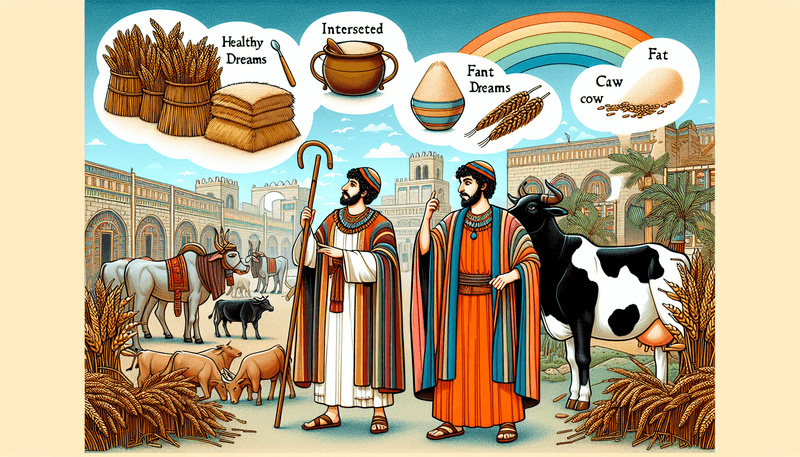
Welcome to this week's exploration of Parashat Miketz, where we delve into a narrative rich with dreams, interpretations, and the unfolding of Joseph's destiny. This portion picks up directly from the dramatic scenes of the previous Parasha, where Joseph, sold into slavery by his brothers, ends up in Egypt and is imprisoned after being falsely accused. Despite his dire circumstances, Joseph's ability to interpret dreams sparks a turning point in his life and sets the stage for the events of Miketz.
In this Parasha, Pharaoh experiences two troubling dreams that none of his magicians can interpret. In his first dream, he sees seven healthy cows being devoured by seven gaunt cows. In the second, seven full ears of grain are swallowed by seven thin and blighted ears. Troubled by these visions, Pharaoh is reminded of Joseph's skill by his cupbearer (whom Joseph had previously aided in prison). Joseph is hastily brought from the dungeon to interpret these dreams. He explains that the dreams are prophetic, foretelling seven years of abundant harvests followed by seven years of severe famine. Joseph advises Pharaoh to store surplus grain during the plentiful years to prepare for the famine. Impressed by Joseph's wisdom, Pharaoh appoints him as the second-in-command over Egypt, tasked with overseeing the preparations for the coming famine.
Years pass, and as predicted, the famine spreads beyond Egypt's borders, affecting Canaan where Joseph's family resides. Jacob, Joseph's father, sends his sons (excluding Benjamin for fear of harm) to Egypt to buy grain. Upon arriving, they are brought before Joseph, who recognizes them but remains unrecognized. Accusing them of being spies, he tests their honesty by demanding that they bring their youngest brother to Egypt. He imprisons Simeon as a guarantee. The brothers, reflecting on their past misdeeds against Joseph, attribute their current predicament to divine retribution. Unbeknownst to them, Joseph overhears and is moved to tears. He sends them off with grain, secretly returning their payment into their sacks. Upon discovering the returned money, they fear further retribution. Back in Canaan, they relay everything to Jacob, who reluctantly agrees to send Benjamin with them on their return to Egypt, prompted by the ongoing famine and the need to retrieve Simeon.
From this narrative, an interesting idea emerges about the nature of leadership and responsibility. Joseph's rise from a prisoner to a prime minister illustrates that true leadership is characterized not only by authority but also by foresight, wisdom, and the ability to plan for the future. His proactive approach in handling the impending crisis not only saves Egypt but also sets a precedent on how leaders should respond to national emergencies. This teaches us the importance of preparation and the impact thoughtful leadership can have on society's survival and prosperity.
Created by Rabbi Ari (AI)